- Gluteus medius
- Bodyweight
- Beginner
Fire hydrant
The fire hydrant works your glutes, with your abs and core helping. Start with 2 to 3 sets of 8 to 12 reps per side, stopping with about 3 reps in reserve. To build muscle, do 2 to 4 sets of 12 to 20 reps per side.
Log this exercise in the app
Weight, reps and records in one tap, saved even without signal.
Log this exerciseVideo on the way
We film every move with real women. Until then, follow the steps and the 3 tips.
- Tip 1Knee stays bent
- Tip 2Torso stays still
- Tip 3Slow up, slow down
Where you should feel it
On the side of your hip and in the glute of the working leg. If you feel it more in your lower back or shoulders, lift your leg less and brace your abs.
- Main muscles
- Gluteus medius
- Also working
- Gluteus maximus, gluteus minimus, hip external rotators, and transversus abdominis
How to do it
Get on your hands and knees on the mat, hands under your shoulders, knees under your hips and back flat.
Keeping your knee bent at 90 degrees, lift one leg out to the side until your thigh is almost level with your hip.
Keep your torso still, without shifting your body toward the supporting leg.
Hold for 1 second at the top and lower slowly until your knee almost touches the floor. Finish all reps, then switch sides.
Common mistakes
Mistake
Shifting your weight to the other side to lift your leg higher.
How to fix it
Keep your weight spread between both hands and the supporting knee. Only lift as high as your torso stays level.
Mistake
Your hips rotate and your torso opens up with the leg.
How to fix it
Keep both sides of your hips level and facing the floor. If they rotate, lift less.
Mistake
Your lower back sags as your leg lifts.
How to fix it
Brace your abs before each rep and keep your back flat from head to hips.
Sets and reps for your goal
| Goal | Sets | Reps | Reps in reserve | Rest |
|---|---|---|---|---|
| Getting started | 2 to 3 | 8 to 12 per side | 3 | 60 to 120 s |
| Muscle and definition | 2 to 4 | 12 to 20 per side | 1 to 3 | 45 to 90 s |
Reps in reserve: how many more reps you could still do with good form when you end the set.
Variations
Same movement, other equipment
With an ankle weight
An ankle weight on your ankle or just above your knee makes the movement harder. Start light.
With a mini band
A mini band just above your knees adds resistance from the very start of the lift.
Standing cable abduction
Standing, with an ankle strap on the low cable, your straight leg opens out to the side.
Hip abduction machine
Seated, both legs open together and the load is easy to increase.
At home or with more support
At home: fire hydrant at home
On a rug or with a folded towel under your knees. Start with no weight; to make it harder, add a mini band above your knees.
Prefer more stability? Side-lying hip abduction
Prefer to take the weight off your hands and knees? Lying on your side, fully supported on the mat, you lift only your top leg.
Taken? Swap it for one of these
They work the same main muscle.
Side-lying hip abduction
Gluteus medius · Bodyweight
BeginnerClamshell
Gluteus medius · Mini band
BeginnerHip abduction machine
Gluteus medius · Machine
Beginner
Keep exploring
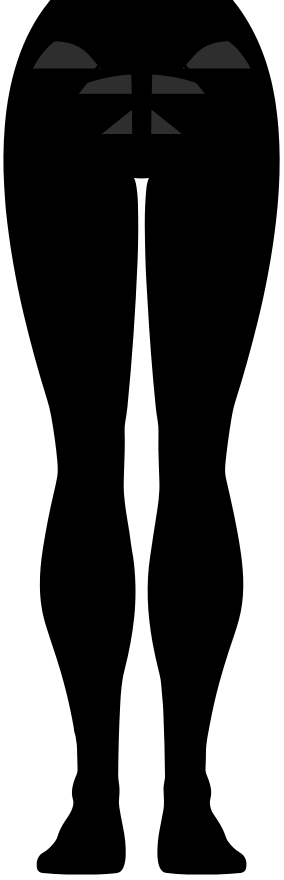
Gluteus medius
14 exercises
How to grow glutes
What the science says about sets, exercises and how long it takes.
Sources
Sets and reps
Currier BS, D'Souza AC, et al. American College of Sports Medicine Position Stand. Resistance Training Prescription for Muscle Function, Hypertrophy, and Physical Performance in Healthy Adults: An Overview of Reviews. Med Sci Sports Exerc. 2026;58(4):851-872.
Muscles worked
Selkowitz DM, Beneck GJ, et al. Which exercises target the gluteal muscles while minimizing activation of the tensor fascia lata? Electromyographic assessment using fine-wire electrodes. J Orthop Sports Phys Ther. 2013;43(2):54-64.
Muscles worked
Distefano LJ, Blackburn JT, et al. Gluteal muscle activation during common therapeutic exercises. J Orthop Sports Phys Ther. 2009;39(7):532-540.
Muscles worked
Boren K, Conrey C, et al. Electromyographic analysis of gluteus medius and gluteus maximus during rehabilitation exercises. Int J Sports Phys Ther. 2011;6(3):206-223.
Review
Draft. This guide is waiting for review by a certified strength and conditioning professional.
Updated October 31, 2026